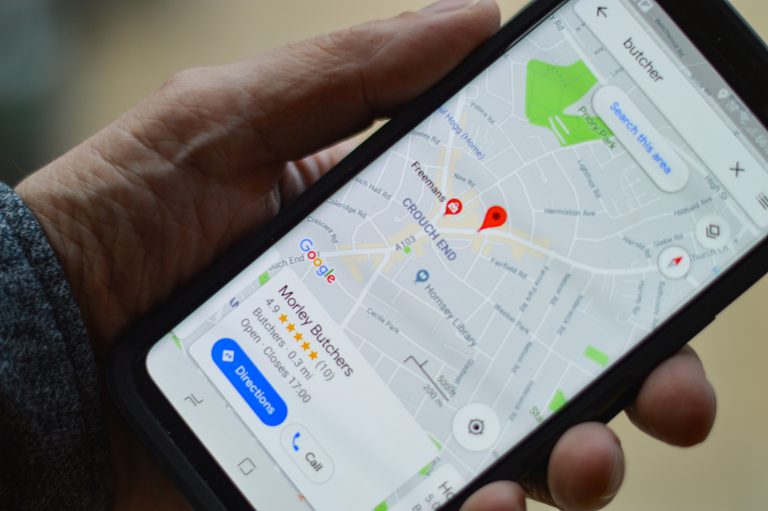
Business owners learning how to show up in ChatGPT are really confronting a larger change in local marketing. Customers still use Google, Maps, business directories, and company websites, but they can now ask AI tools to recommend a business, compare several options, explain which provider fits their needs, or research a company before making contact.
That changes the path between a customer’s question and your business.
Google remains enormously important. Traditional SEO remains enormously important, too. But businesses now have more places where they may need to be understood, trusted, and found.
The practical response is less exotic than some of the terminology around AI search makes it sound. Local businesses need a clear digital presence that provides both customers and search engines with reliable information about who they are, what they do, where they work, and why someone should choose them.
What Is AI Search for a Local Business?
AI search allows someone to ask a detailed question in conversational language and receive a synthesized answer rather than simply a page of ranked links.
ChatGPT Search, for example, can search the web for current information and provide links to the sources it uses. OpenAI also allows users to share their location so ChatGPT can provide more relevant local recommendations.
A homeowner might ask:
Who repairs historic masonry near me and has experience with older homes?
Someone planning a move might ask:
Which landscaping companies in my area handle both design installation and ongoing maintenance?
A customer comparing providers could ask:
Which of these three HVAC companies has the strongest reputation for communication and reliable scheduling?
These questions reveal why AI search matters for local marketing. Customers can describe the qualities they care about instead of reducing their needs to a short keyword.
Google is moving in a similar conversational direction through AI Overviews and AI Mode. Google says these AI features help people explore complex questions while surfacing relevant links from the web.
For a local business, AI search is another environment where information about your company can help shape discovery.
How Is AI Search Different From Traditional Google Search?
Traditional search usually starts with a query and returns a ranked set of results. The customer decides which links to open and gathers the information needed to make a choice.
AI search can do more of that synthesis before the customer ever reaches a website.
A customer can ask a question, add a requirement, rule out an option, request a comparison, and continue refining the search in the same conversation. The AI system may draw from multiple websites and data sources to construct its response.
The recent Yelp–OpenAI partnership offers a useful example. Yelp is now providing OpenAI access to reviews, ratings, photos, and business details that can be surfaced in response to local queries.
That means someone researching a local business in ChatGPT may encounter information originating from Yelp without beginning the search on Yelp.
Your website is important, but it is not the only place that tells the internet who you are.
Reviews, business profiles, directories, news coverage, third-party websites, and other credible sources can all contribute to the broader digital picture surrounding a company.
That is one reason learning how to show up in ChatGPT cannot be reduced to adding a few AI-focused keywords to a website.
What Information Helps AI Understand a Local Business?
Start with the information a prospective customer would need to confidently understand your company.
Your website should make your primary services easy to identify and explain each important service in enough detail to answer real customer questions. It should clearly establish the geographic areas you serve and provide accurate information about the company itself.
Expertise matters, too. An About page can explain relevant experience, qualifications, approach, and specialties. Case studies or project examples can demonstrate what the company has actually done. Reviews and testimonials add evidence from customers. Frequently asked questions can clarify details that may otherwise remain buried in sales conversations.
These elements were useful long before AI search appeared.
Their value is growing because search systems increasingly need to interpret relationships between information rather than merely locate pages containing a phrase.
For example, a customer may never search the exact phrase best plumber for an older home with recurring drain problems. If a plumbing company’s site clearly describes its drain-cleaning services, service area, experience with older plumbing systems, and related customer questions, there is more useful information to help determine whether that company fits the request.
Ignite Local already approaches these pieces as part of a connected digital presence. Its services include website design and optimization, SEO and local SEO, service and location pages, business-profile optimization, reputation management, content marketing, and related visibility strategies.
AI search gives those familiar marketing fundamentals another place to matter.
Is Traditional SEO Still Important for AI Search?
Yes.
Businesses wondering how to show up in ChatGPT should not abandon the SEO work that helps search engines find, understand, and trust their websites.
OpenAI explicitly says there is no way to guarantee top placement in ChatGPT Search. It does, however, say that websites need to allow its search crawler, OAI-Searchbot, to access them in order to be included. OpenAI also describes ChatGPT Search ranking as depending on factors intended to help users find reliable and relevant information.
Google offers similar guidance for its own AI search experiences. According to Google, the SEO best practices that apply to traditional Search remain relevant for AI Overviews and AI Mode, and website owners do not need a separate set of special technical optimizations to appear there.
That is an important distinction amid growing interest in generative engine optimization services, answer engine optimization services, and other new approaches to AI visibility.
The terminology is evolving. The fundamentals remain recognizable.
Technical accessibility matters. Helpful content matters. Clear site structure matters. Accurate business information matters: authority and credibility matter. A website still needs to serve the human being who eventually decides whether to call, request a quote, book an appointment, or make a purchase.
A strong search foundation is becoming useful in more places.
How Can a Local Business Prepare for AI Search?
If your goal is to show up in ChatGPT and other AI-assisted searches, focus first on making your business unusually easy to understand.
A practical starting point is to:
- Strengthen your service pages. Give each important service enough information to establish what you provide, who it is for, and relevant expertise.
- Clarify where you work. Make service areas explicit on your website and keep location information consistent across important listings.
- Build out your company and expertise information. Explain who is behind the business, relevant experience, qualifications, specialties, and anything else that establishes credibility.
- Answer real customer questions. Use the questions customers ask before hiring you to guide FAQs and useful website content.
- Manage your reputation. Monitor reviews, respond appropriately, and maintain healthy profiles on platforms important to your industry.
- Add credible proof. Case studies, testimonials, project examples, photos, awards, credentials, and other evidence can help customers understand why they should trust the business.
- Keep listings accurate. Make sure major business profiles and directories reflect current contact information, services, hours, and locations.
- Keep the website technically accessible. Search platforms cannot surface information they cannot reach or interpret.
This is essentially what good AI search optimization services should accomplish: strengthen the information ecosystem around a business rather than promise a secret shortcut to AI recommendations.
No agency can guarantee that ChatGPT will choose one local company over another. OpenAI itself says top placement cannot be guaranteed.
What businesses can control is the quality, clarity, consistency, and accessibility of the information AI systems and potential customers encounter.
Does Your Website Need to Change for AI Search?
Possibly, but the first question should be whether your current website clearly represents the business you have today.
An older website may have thin service pages, vague geographic information, outdated company details, or very little evidence of expertise. Other sites look polished but make it surprisingly difficult to determine exactly what the company offers.
Those weaknesses already make it harder for customers to choose the business. They also leave search platforms with less useful information to interpret.
A website redesign can help when the site’s structure, usability, technology, or positioning has become a genuine obstacle. In other cases, targeted optimization may be enough. Strengthening individual service pages, improving location information, adding customer questions, expanding proof, or clarifying company expertise can improve the site without rebuilding it.
Ignite Local’s website services focus on sites designed for both visibility and conversion, while its SEO work helps businesses strengthen local search visibility and the content that supports it.
The goal is to give customers a useful destination when they arrive, and give search technologies a clearer understanding of the business before they do.
How Do Reviews Fit Into AI Search?
Reviews increasingly have a life beyond the platform where a customer originally wrote them.
The Yelp–OpenAI partnership makes that particularly visible. Yelp reviews and other business information can now contribute directly to local discovery inside ChatGPT.
Reviews also provide something that a company’s own marketing cannot: customers describing their experiences in their own words.
That can help establish qualities that are difficult to communicate through basic listing information alone. Customers may repeatedly mention responsiveness, professionalism, workmanship, cleanliness, friendliness, speed, or knowledge of a particular kind of project.
Reputation management therefore belongs in the AI-search conversation alongside SEO and website optimization. Ignite Local’s reputation management services include monitoring reviews across major platforms and helping businesses manage how they respond to customer feedback.
Can You Guarantee That a Business Will Rank in ChatGPT?
No, and businesses should be cautious of anyone who says otherwise.
There is no published formula for how to rank in ChatGPT that allows an agency to guarantee a particular recommendation or position.
AI search also does not operate exactly like a traditional search-results page. The answer may depend on the customer’s question, location, context, and the information available at the time.
That makes how to show up in ChatGPT a better strategic question than How do I get the number-one ChatGPT ranking?
The goal is to increase the likelihood that your business can be found, understood, and credibly considered when it is relevant to the customer’s request.
That requires broader digital visibility rather than a single ranking tactic.
Local Marketing Is Becoming an Ecosystem
Search used to feel more linear. A customer searched Google, saw a list of results, clicked a website, and decided what to do next.
Today, that journey can move through search engines, maps, directories, review platforms, social media, AI assistants, and a company’s own website.
Those channels increasingly influence one another.
For local business owners, the opportunity is to build a digital presence that remains clear and credible across that entire environment.
That means continuing to invest in the foundations that already matter: useful websites, strong local SEO, accurate business information, credible content, customer reviews, and evidence of real expertise. AI search adds another reason to make those pieces work together.
And it is still evolving.
The next major advantage will not come from guessing every new acronym or chasing every algorithm change. It will come from making your business easy to understand and valuable enough to recommend wherever customers decide to search.
Prepare Your Business for the Next Generation of Search
Ignite Local helps local businesses build a stronger presence across websites, search engines, business listings, reviews, and emerging AI discovery channels. From local SEO and website optimization to reputation management and content, we help make the information surrounding your business clearer, more credible, and easier for customers to find.
If you want to understand how prepared your current digital presence is for changing search behavior, schedule a free Web Presence Strategy Call with Ignite Local.